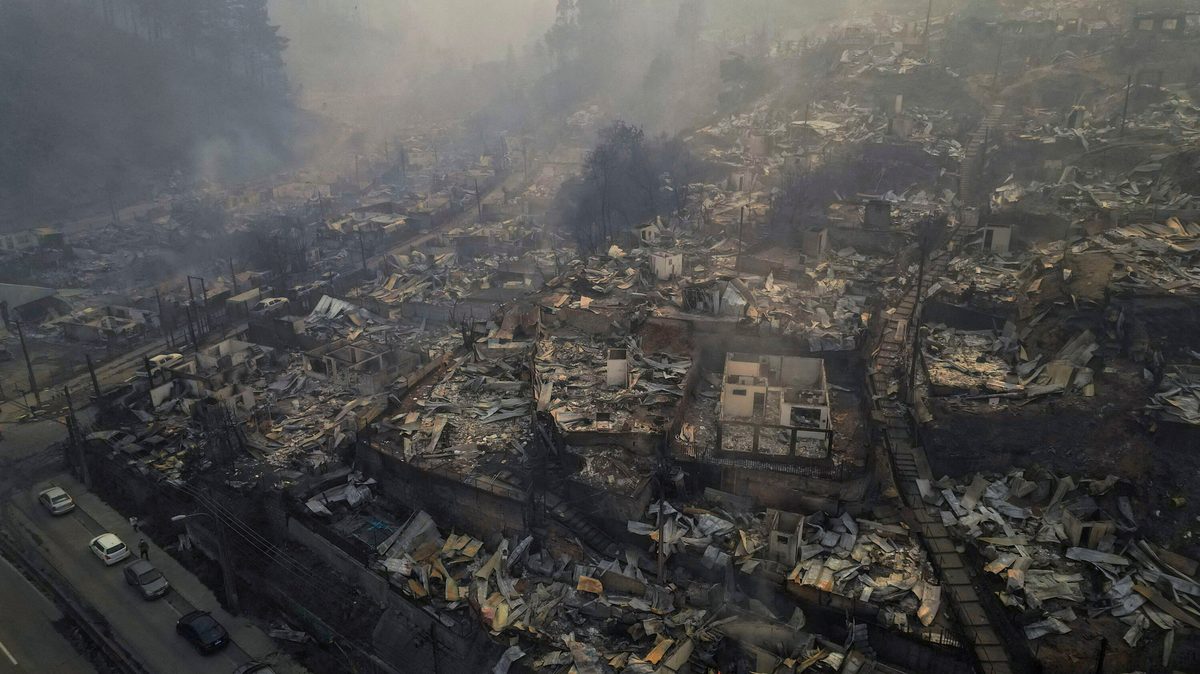
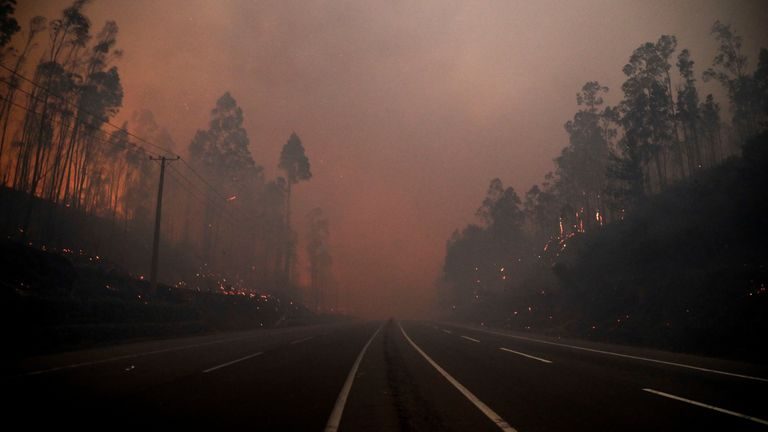
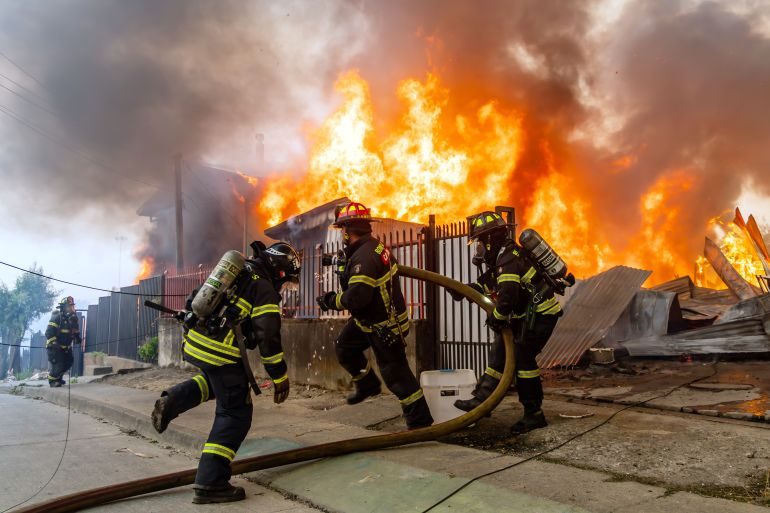
Less than a year after wildfires killed 138 people near Viña del Mar, Chile is burning again. Fires across the Biobío and Ñuble regions have killed at least 21 people since January 16, destroyed over 2,359 homes, and forced more than 50,000 to evacuate.
The blazes consumed 45,700 hectares (176 square miles), already more than the area burned in the 2024 Viña del Mar disaster. President Gabriel Boric declared a state of catastrophe, imposed a nighttime curfew, and on January 23 decreed two days of national mourning. Uruguay sent 40 firefighters on a military C-130 on January 22; 145 Mexican firefighters arrived in Concepción that same day, with Argentina, Brazil, Spain, and the United States also sending crews.
Chilean police arrested a 39-year-old suspect accused of using liquid accelerants to start the Trinitarias fire — as in 2024, when first responders were charged with arson. A court extended his detention through January 26. Separately, civilian drones forced suspension of firefighting aircraft near the town of Florida.
Questions about this story
Free account needed to ask — your question is kept and asked for you right after sign-up. Answers are public.
No questions yet — be the first to ask.
Key Indicators
21
Confirmed Deaths
Fatalities across Biobío and Ñuble regions; national mourning declared
50,000+
People Evacuated
Residents forced to flee affected areas since January 16
2,359
Homes Destroyed
Updated government assessment significantly exceeds initial estimates
33
Active Fires
As of January 20, down from 75 total fires reported in the region
51,986
Hectares Burned
126,480 acres (197 square miles) as of January 25—triple the 2024 Viña del Mar area
110
Arrests for Interference
People arrested for obstructing firefighting operations, plus one arson suspect
17 events
Latest: January 27th, 2026 · 8 months ago
Showing 8 of 17
JK to step
Tap a bar to jump to that date
January 2026
NASA Satellite Confirms Fires Still Burning
LatestImpact Assessment
NASA MODIS satellite imagery shows multiple active fire fronts across Biobío and Ñuble regions. Total burned area reaches 51,986 hectares (126,480 acres)—14% increase from previous assessments.
Court Orders Pretrial Detention for Arson Suspect
Investigation
Guarantee Court of Concepción formally orders pretrial detention through January 26. Prosecution alleges fire started from faulty wood-burning stove, not deliberate accelerant use as initially reported. 110 additional people arrested for interfering with firefighting operations.
Court Extends Arson Suspect's Detention
Investigation
Guarantee Court of Concepción extends pretrial detention through January 26 for formal charges. Suspect identified as 39-year-old man with prior police records. Forestry company video evidence links suspect to Trinitarias fire.
Boric Declares Two Days of National Mourning
Government Response
President Boric decrees national mourning for Thursday and Friday in memory of 21 people killed. CONAF reports 47 active fires nationwide, 17 classified as megafires.
Civilian Drones Force Aircraft Suspension
Operational Challenge
Unauthorized civilian drones near Florida force suspension of firefighting aircraft operations. National Forestry Corporation reiterates drone prohibition during firefighting. Drones believed operated by journalists and hobbyists filming aerial footage.
Uruguayan Firefighters Deploy
International Response
40 Uruguayan firefighters depart for Chile on seven-day mission through January 31. Death toll rises to at least 21. Cooling temperatures aid containment efforts.
Mexican Firefighting Contingent Arrives
International Response
145 Mexican firefighters land at Concepción airport, joining international response efforts alongside Uruguayan, Brazilian, Argentine, Spanish, and U.S. crews.
Damage Assessment Shows 2,359 Homes Destroyed
Impact Assessment
Updated government assessment reveals 2,359 homes destroyed—four times initial estimates. Total area burned reaches 45,700 hectares (176 square miles), already exceeding 2024 Viña del Mar fire.
Arson Suspect Arrested
Investigation
Chilean police arrest suspect accused of using liquid accelerants to start fires. Authorities seize five liters of fuel and containers of accelerant in Concepción.
Uruguay Announces Firefighter Deployment
International Response
President Yamandú Orsi confirms Uruguay will send 40 firefighters aboard an Air Force C-130 in response to Chile's formal humanitarian aid request.
Death Toll Reaches 20
Casualty Update
Officials confirm 20th death. Interior Minister Álvaro Elizalde reports 536 homes destroyed, warns extreme temperatures hampering containment.
International Aid Offers Arrive
International Response
Mexico, Argentina, Brazil, and Spain offer firefighters and equipment. France announces 80 firefighters in transit. President Boric thanks international partners.
Boric and Kast Appear Together
Political
President Boric and president-elect José Antonio Kast make joint appearance from La Moneda urging public responsibility—an unusual show of political unity.
Boric Declares State of Catastrophe
Government Response
President Gabriel Boric declares a state of catastrophe for Biobío and Ñuble regions, enabling military deployment and international aid coordination. Nighttime curfew imposed.
Death Toll Reaches 19
Casualty Update
Officials confirm 19 deaths—18 in Biobío, one in Ñuble. Over 50,000 people evacuated. At least 325 structures destroyed.
Death Toll Climbs, Evacuations Begin
Escalation
Fires spread rapidly through coastal towns including Lirquén and Penco. Authorities order mass evacuations as death toll rises to 15.
Wildfires Ignite Across Biobío and Ñuble
Incident
Multiple fires break out across Chile's south-central regions amid extreme heat, strong winds, and drought conditions. Temperatures exceed 38°C (100°F).
Scenarios
1
Fires Contained Within Days, Recovery Begins
Likely
Discussed by: Chilean forestry officials, international fire experts
Dropping temperatures and reduced winds allow firefighters to establish control lines around remaining blazes. Death toll stabilizes below 30. Government focuses on housing displaced residents and compensating victims ($700-$1,500 per household as announced). International crews return home by early February.
2
Second Wave of Fires Extends Crisis Into February
Possible
Discussed by: Climate researchers at CR2 (Center for Climate and Resilience Research), meteorologists
Another heat wave or wind event reignites contained fires or sparks new ones before seasonal rains arrive. Death toll exceeds 50, matching or surpassing the 2017 megafire season. Political pressure mounts on Boric administration over emergency preparedness.
3
Arson Investigation Reveals Organized Activity
Uncertain
Discussed by: Security Minister Luis Cordero, Chilean prosecutors
Investigation into the arrested suspect and additional accelerant discoveries leads to charges against multiple individuals. If pattern resembles 2024—where firefighters and forestry workers were charged—it would deepen public distrust of the very agencies tasked with fire prevention.
Back-to-back catastrophic fire seasons (2024 and 2026) generate political will to reform Decree Law 701, the 1974 law that subsidized pine and eucalyptus plantations. CONAF's pilot programs converting plantations to native forests scale up significantly. Forestry companies resist but face growing pressure.
Historical Context
3 moments from history that rhyme with this story — and how they unfolded.
1 of 3
January-February 2017
Chile Megafires (2017)
Nearly 600,000 hectares burned across central Chile—the largest area in a single season since records began in the 1960s. The town of Santa Olga was destroyed. Eleven people died, including five firefighters. Over 20,000 personnel from more than a dozen countries joined the response.
Then
Four fires exceeded 40,000 hectares each. Estimated 30 megatonnes of CO₂ released—8% of global fire emissions that month.
Now
Sparked debate over Chile's forestry model. Researchers documented that over 80% of megafires since 2010 occurred in regions dominated by pine and eucalyptus plantations.
Why this matters now
The 2017 disaster established the link between Chile's industrial forestry model and catastrophic fire risk. The same conditions—plantation-dominated landscapes, drought, extreme heat—are present in the 2026 fires.
2 of 3
September 2019-February 2020
Australia Black Summer (2019-2020)
Bushfires burned over 17 million hectares across New South Wales, Victoria, Queensland, and other states. 33 people died, including nine firefighters. Over 3,000 homes destroyed. International firefighters arrived from the US, Canada, New Zealand, and others—the first Canadian deployment to Australia since 2009.
Then
Australia established a $2 billion National Bushfire Recovery Fund. Approximately 8,000 Australian Defence Force personnel deployed for evacuations and supply delivery.
Now
Royal Commission recommended improved national coordination and international resource-sharing frameworks for future fire emergencies.
Why this matters now
Black Summer demonstrated the model for international firefighter mutual aid that Chile is now activating. Uruguay's C-130 deployment follows the same playbook of cross-border emergency cooperation that helped Australia in 2020.
3 of 3
February 2024
Viña del Mar Wildfires (2024)
Wildfires erupted in the Valparaíso region northwest of Santiago during extreme summer heat. Flames descended from hillside wilderness into residential neighborhoods of Viña del Mar and Quilpué, killing 138 people—Chile's deadliest wildfire disaster on record and the fifth-deadliest fire globally since 1900.
Then
Over 14,000 buildings damaged or destroyed. Two days of national mourning declared. 31 firefighting aircraft and 2,700 personnel deployed.
Now
Investigation led to arrests: a volunteer firefighter and a forestry brigade member were detained in May 2024. By July 2025, nine individuals faced charges including conspiracy and environmental damage.
Why this matters now
The current Biobío fires come less than a year after Viña del Mar, raising questions about whether Chile has improved its fire prevention and response. The arson arrest echoes the 2024 case where first responders allegedly started the blaze.