Pull to refresh
Logo
OpenAI gives ChatGPT self-updating long-term memory

OpenAI gives ChatGPT self-updating long-term memory

New Capabilities

The 'Dreaming V3' system synthesizes a user's history across years of chats, then ages out what's stale

June 5th, 2026: Dreaming V3 launches

Overview

Updated Jun 5

For most of ChatGPT's life, you had to tell it to remember things, one fact at a time. On June 5, 2026, OpenAI changed that. Its new 'Dreaming V3' system reads across years of your past chats and writes its own running profile of you, no prompting required.

The system rolled out first to paying Plus and Pro users in the United States. OpenAI says it cut the computing cost of running the feature by about five times, which makes a free-tier version possible within weeks. That turns a chatbot you query into an assistant that carries context forward, and it puts a standing record of your preferences inside a company's servers.

Why it matters

ChatGPT now builds a quiet, self-updating dossier on each user, raising what it can do for you and how much it knows about you.

Questions about this story

Free account needed to ask — your question is kept and asked for you right after sign-up. Answers are public.

0

I’ve been using ChatGPT for a long time and it’s had memory for a long time and it was automatic what it makes this different?

The old memory required you to tell ChatGPT what to remember; Dreaming V3 reads years of your chat history on its own and writes a profile without any instruction from you.

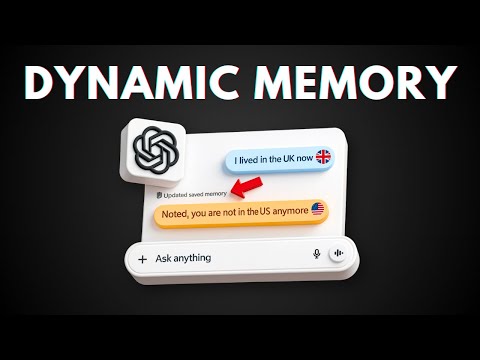
Why it matters: It also ages out stale entries automatically — a memory like 'you're going to Singapore in July' rewrites itself to past tense after the trip, something the old system never did.

  • Old memory was explicit note-taking: you had to say 'remember this' or confirm a fact; entries went stale and you had to manage them yourself.
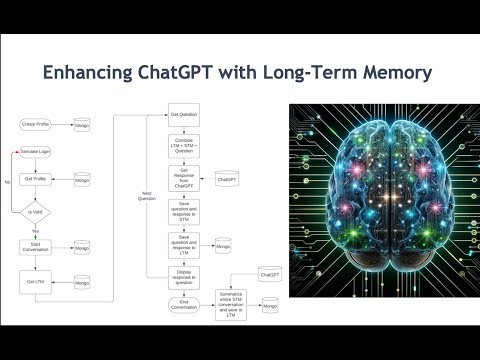
  • Dreaming V3 runs a background process that synthesizes context from many conversations simultaneously, capturing preferences that surface naturally — no prompt required.
  • The shift is from retrieval (a list of saved facts) to synthesis (a continuously updated model of you): factual recall accuracy jumped from 41.5% in 2024 to 82.8% now.
  • Preference adherence hit 71.3% and temporal accuracy — the system's ability to know what's current vs. outdated — reached 75.1%, capabilities the earlier system lacked entirely.
Room for disagreement
  • Tech Times notes that Dreaming V3 'limits the audit trail' — users can view and delete memories but no longer see exactly which conversations fed a given entry, which privacy advocates say reduces meaningful control even as OpenAI frames it as an improvement.
AI-generated with web search — may be wrong. Check the linked sources.

Key Indicators

~5x
Compute cut
OpenAI says optimizations reduced the computing power to serve the feature to free users by roughly five times.
30 days
Deleted-memory retention
Logs of deleted saved memories may be kept up to 30 days for safety and debugging.
82.8%
Factual recall rate
Reported success on factual recall tasks, up from 41.5% in earlier testing.
Aug 2026
EU AI Act duties begin
New compliance obligations under the EU AI Act start in August 2026.

Voices

Curated perspectives — historical figures and your fellow readers.

Ever wondered what historical figures would say about today's headlines?

Sign up to generate historical perspectives on this story.

People Involved

Organizations Involved

Timeline

April 2025 June 2026

4 events Latest: June 5th, 2026 · 3 months ago
Tap a bar to jump to that date
  1. Dreaming V3 launches

    Latest Product

    OpenAI releases a rebuilt memory system to US Plus and Pro users. It auto-synthesizes context across years of chats and lets users view, edit, or delete entries.

  2. Google expands Gemini memory

    Competition

    Google rolls out 'Personal Intelligence' for Gemini in the US, letting it draw on Gmail, Photos, and other Google data.

  3. Anthropic gives Claude memory

    Competition

    Anthropic begins letting Claude remember prior interactions for paid users, sharpening the race on personalization.

  4. OpenAI introduces 'dreaming'

    Product

    OpenAI adds a background process that learns from past conversations and synthesizes memory, the foundation for later versions.

Scenarios

1

OpenAI extends Dreaming V3 to free users

Likely Resolves by Q3 2026

Discussed by: OpenAI's own rollout statement; coverage in TechTimes and iClarified

OpenAI said the five-fold compute cut makes a free-tier rollout practical in the weeks after launch. If the infrastructure holds and demand is manageable, free and ChatGPT Go users get the system, putting persistent memory in front of the largest pool of users. This is the company's stated plan, so the main question is timing, not intent.

2

EU regulators open a probe into ChatGPT memory

Possible Resolves by Jun 5, 2027

Discussed by: Privacy analysts citing GDPR profiling rules and the EU AI Act timeline

Automatic synthesis of a user's history can count as profiling under the EU's General Data Protection Regulation, which carries erasure rights. The fact that deleting a chat does not delete derived memories, plus 30-day log retention, gives a data-protection authority a concrete hook. With EU AI Act duties starting in August 2026, a formal inquiry or enforcement action could follow.

3

Security researchers show a memory-poisoning attack

Possible Resolves by Jun 5, 2027

Discussed by: Tenable Research, which earlier flagged prompt-injection risks in ChatGPT

Persistent memory raises the stakes of prompt injection: a malicious instruction hidden in a webpage or document could plant a false 'memory' that shapes later answers. OpenAI has not said whether Dreaming V3 closes the holes Tenable identified. A published proof-of-concept showing attacker-controlled memory would force a response.

Historical Context

2 moments from history that rhyme with this story — and how they unfolded.

April 2004

Gmail launches with content scanning (2004)

Google launched Gmail with then-huge free storage, paid for by scanning email content to target ads. Privacy groups objected that machines reading private mail crossed a line, even if no human read it.

Then

Gmail drew complaints and regulatory questions but grew fast on its free storage and speed.

Now

Google stopped scanning Gmail for ad targeting in 2017, after the practice shaped years of privacy debate.

Why this matters now

Like Gmail, Dreaming V3 trades deeper machine access to your data for a better free product. The same question returns: does processing your private content for utility count as a privacy cost?

September 2006

Facebook News Feed backlash (2006)

Facebook turned scattered profile updates into a single feed that broadcast everyone's activity. Users revolted, saying the same information now felt exposed because it was aggregated and surfaced automatically.

Then

Facebook kept the feature but added privacy controls within days after mass protest.

Now

News Feed became the core of the product and the model for social media.

Why this matters now

Synthesis is the issue in both cases. Facts users shared freely feel different once a system stitches them together and acts on them without being asked, which is exactly what 'context bleed' complaints describe.

Sources

(6)