

Pull to refresh
Logo
FDA clears personalized magnetic brain therapy for PTSD after trial reports high remission

FDA clears personalized magnetic brain therapy for PTSD after trial reports high remission

New Capabilities

The FDA's device summary now lists 158 patients and a 68.2% remission rate; a smaller peer-reviewed study is out, and the pivotal paper is still pending.

Overview

Updated Oct 27

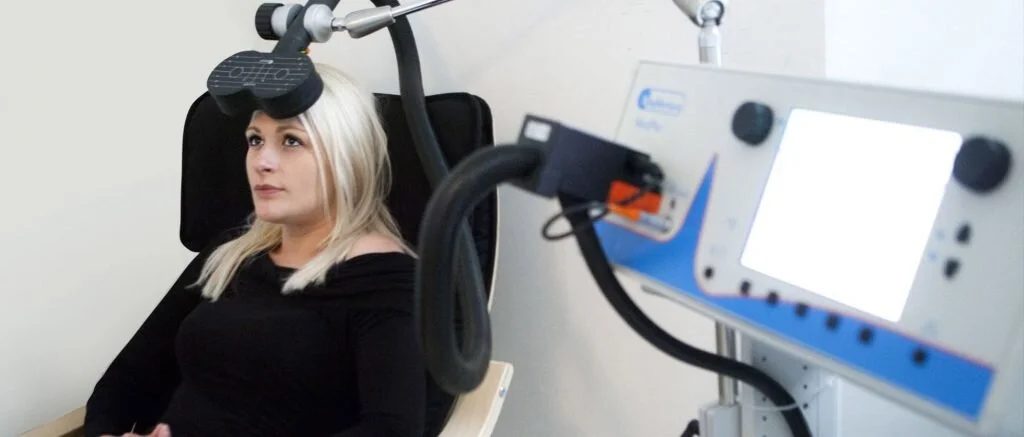
The FDA cleared Wave Neuroscience's personalized magnetic brain therapy for PTSD on June 3, 2026. The clinical summary filed with the decision, K260402, reports that 68.2% of treated patients were in remission two to four months after treatment.

That summary covers 158 adults, 77 on active treatment and 81 on a sham version, across 20 to 25 sessions, with a 27-point average drop on the PCL-5 symptom questionnaire and no serious side effects. A separate peer-reviewed study of 73 military veterans, published in Personalized Medicine in Psychiatry in October 2026, found a 33.9% symptom reduction against 24% for sham. The pivotal trial's own journal paper has not appeared.

Why it matters

If the 68% remission rate survives peer review, millions of PTSD patients gain a non-drug option that has outperformed standard medication.

Questions about this story

Free account needed to ask — your question is kept and asked for you right after sign-up. Answers are public.

No questions yet — be the first to ask.

Key Indicators

68.2%
Remission in treated arm
Share of actively treated patients in remission at the two-to-four-month follow-up, per the FDA 510(k) summary K260402. The journal paper is pending.
52%
Reported symptom reduction
Company-reported average drop in symptom scores, measured over a course of 20 to 25 sessions.
158
Participants in pivotal trial
77 received active treatment and 81 a sham version; 84% completed the course.
10.9%
Maximum remission in 2020 medication review
Benchmark from a different set of studies, cited by the company; the two cannot be compared head-to-head.

Voices

Curated perspectives — historical figures and your fellow readers.

Sign up to generate historical perspectives on this story.

People Involved

Organizations Involved

Timeline

2024 October 2026

4 events Latest: October 23rd, 2026 · 3 weeks ago
Tap a bar to jump to that date
  1. Trial results announced

    Latest Statement

    Texas A&M releases company trial figures: 52% symptom reduction and 68% remission over a five-to-six-week course, with the full findings not yet published.

  2. Peer-reviewed study of 73 veterans published

    Study

    Personalized Medicine in Psychiatry publishes a randomized, sham-controlled study of EEG-guided magnetic stimulation in 73 military veterans: a 33.9% drop in PCL-M scores against 24.0% for sham over 10 sessions in two weeks.

  3. FDA clears MeRT for PTSD

    Regulatory

    The FDA clears the MeRT system as an adjunct treatment for PTSD in adults through the Traditional 510(k) pathway. The clinical summary, K260402, is filed with the decision.

  4. FDA grants MeRT breakthrough designation

    Regulatory

    MeRT receives FDA Breakthrough Device designation, speeding its path to clearance.

Scenarios

1

Peer review confirms a remission rate near 68%

Possible Resolves by Q2 2027

Discussed by: Wave Neuroscience's own announcement via Texas A&M

Wave publishes the pivotal trial in a medical journal. The FDA summary already reports 158 participants and 68.2% remission at follow-up; a journal paper with the same numbers would make MeRT a documented non-drug PTSD option.

2

Published data reveal a weaker effect than announced

Uncertain Resolves by Q2 2027

Discussed by: Morning Overview's independent review of the release

The pivotal paper has not appeared. The FDA summary rests on a 27-point PCL-5 improvement that separated from sham at p<0.046; if the journal version shows a smaller or shorter-lived effect, the headline number shrinks.

3

Clearance holds, but adoption hinges on payer coverage

Likely Resolves by End of 2027

Discussed by: Trade and clinical press coverage

FDA clearance does not guarantee clinics offer the treatment or insurers pay for it. A course runs 20 to 25 sessions, and Wave says a US billing code due in 2027 will let doctors charge for the brain measurement and the protocol calculation.

Historical Context

2 moments from history that rhyme with this story — and how they unfolded.

2021-2026

MDMA-assisted therapy for PTSD (2021-2026)

A living meta-analysis of six randomized trials covering 286 participants found MDMA-assisted therapy roughly doubled remission odds versus controls. Reported remission reached 68% at one year of follow-up in some cohorts.

Then

The FDA granted expanded access, letting treatment-resistant patients receive the therapy before full approval.

Now

MDMA remains a Schedule 1 drug, and the therapy still lacks final FDA approval.

Why this matters now

It is the other leading non-drug PTSD treatment with remission rates near 68%, showing both the promise and the regulatory friction such therapies face.

2008

Transcranial magnetic stimulation for depression (2008)

The FDA first cleared repetitive transcranial magnetic stimulation (rTMS) for major depression, giving psychiatrists a non-drug, non-invasive option for patients who had not responded to medication.

Then

rTMS became a covered therapy and is now standard for treatment-resistant depression.

Now

Its adoption took years and depended on payer coverage and repeated sessions, a pattern likely to repeat for MeRT.

Why this matters now

MeRT uses the same technology family — magnetic pulses through the scalp — applied to PTSD with EEG-guided personalization.

Sources

(9)