




Pull to refresh
Logo
Nahant can use eminent domain to block Northeastern research center, court rules

Nahant can use eminent domain to block Northeastern research center, court rules

Rule Changes Boston, MA local

Massachusetts' highest court calls scenic preservation a 'quintessential' public use, clearing the way for condemnation

September 3rd, 2026: SJC rules Nahant can use eminent domain

Overview

Updated 6 days ago

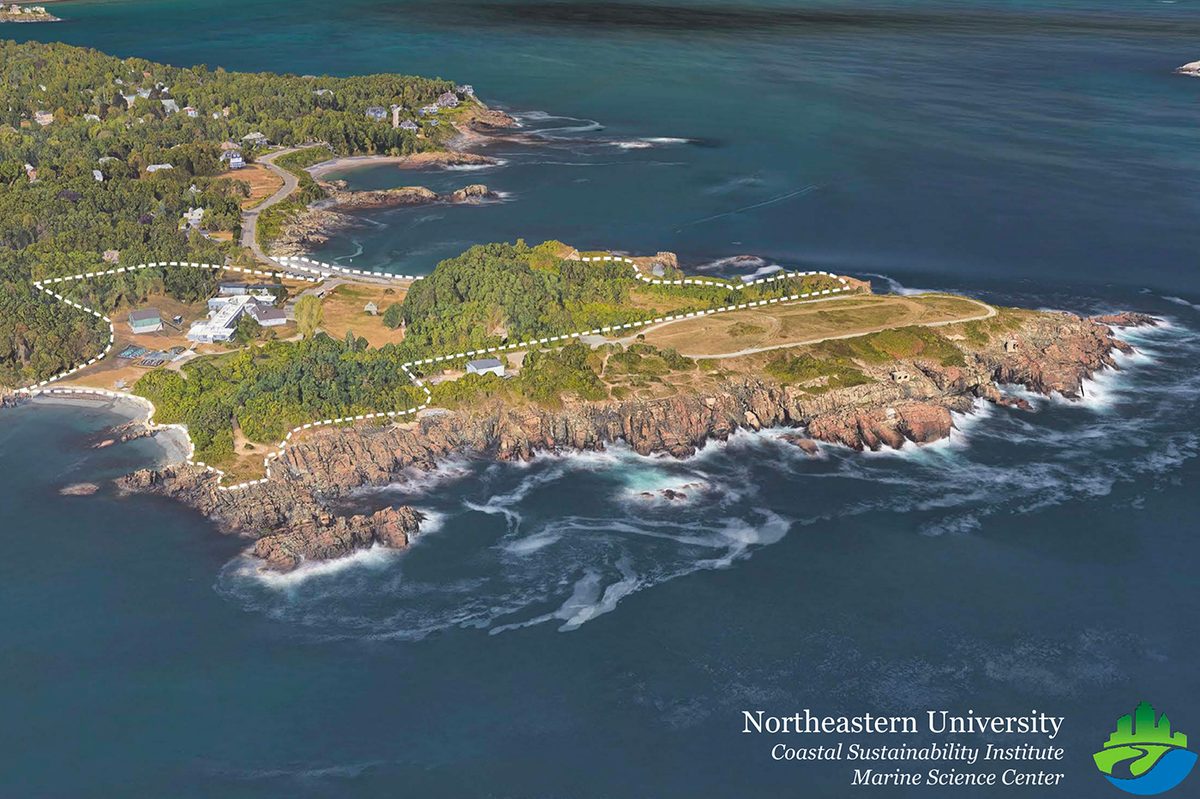
Nahant can condemn a 20-acre parcel owned by Northeastern University and block a planned marine research center. Massachusetts' highest court ruled that preserving the town's scenic quality is a 'quintessential' public use for eminent domain.

The ruling flips the usual eminent-domain script: governments normally seize land to enable development, not to stop it. The property was offered to Nahant as a public park in the 1960s, when officials refused it, worried about visitors from Boston, Somerville, and Chelsea. Northeastern bought the land years later and proposed a 55,000-square-foot research center in 2018.

Why it matters

Massachusetts towns can now use scenic preservation as legal grounds to seize land and block construction, a new weapon in local development fights.

Questions about this story

Free account needed to ask — your question is kept and asked for you right after sign-up. Answers are public.

No questions yet — be the first to ask.

Key Indicators

20
Acres at stake
The 20-acre former military parcel Northeastern owns in Nahant.
55,000
Square feet of proposed facility
Size of the marine research center Northeastern planned to build.
60
Years of conflict
Since Nahant first rejected the land as a public park in the 1960s.

Voices

Curated perspectives — historical figures and your fellow readers.

Ever wondered what historical figures would say about today's headlines?

Sign up to generate historical perspectives on this story.

Organizations Involved

Timeline

January 1960 September 2026

3 events Latest: September 3rd, 2026 · 1 week ago
  1. Northeastern proposes marine research center

    Proposal

    The Boston university proposes a 55,000-square-foot marine research center on the 20-acre parcel it owns in Nahant.

  2. Nahant rejects military land as public park

    Land-use decision

    Town officials refuse the former military installation as a seaside park, with one official citing fears about visitors from Boston, Somerville, and Chelsea.

Scenarios

1

Nahant condemns land and creates public open space

Likely Resolves by End of 2027

Discussed by: Local officials and land-use attorneys following the SJC ruling

The town initiates formal condemnation proceedings, pays just compensation based on independent appraisals, and takes title to the 20-acre parcel. Town leaders have indicated the goal is preserving the scenic coastal land as open space, which the court has now blessed as a legitimate public purpose.

2

Northeastern abandons project and sells the land

Possible Resolves by Mar 1, 2027

Discussed by: University governance observers noting the cost of continuing the fight

Facing a forced taking, Northeastern decides the 55,000-square-foot research center isn't worth the legal and reputational battle. It withdraws the proposal and sells the property, possibly to the town or a conservation group, ending the dispute by agreement rather than condemnation.

3

Northeastern challenges the taking in federal court

Unlikely Resolves by Sep 3, 2027

Discussed by: Property-rights attorneys citing the Fifth Amendment's public-use requirement

Northeastern argues in U.S. District Court that the condemnation violates the Takings Clause, claiming the town's real motive is exclusion rather than scenic preservation. Federal courts have interpreted public use broadly since Kelo v. New London, making this an uphill fight that could delay the town's plans for years.

Historical Context

3 moments from history that rhyme with this story — and how they unfolded.

March 1975

Southern Burlington County NAACP v. Township of Mount Laurel (1975)

New Jersey's Supreme Court struck down Mount Laurel's zoning rules that excluded affordable housing, ruling that municipalities can't use land-use powers to keep out lower-income residents.

Then

Mount Laurel was ordered to allow affordable housing; the doctrine expanded across New Jersey through the Fair Housing Act.

Now

The Mount Laurel doctrine remains central to exclusionary land-use law, though many local governments still resist affordable housing mandates.

Why this matters now

Nahant's documented 1960s fear of 'the wrong sort of people' raises the same concern — local power used to shape who can access a community. The SJC didn't rule on exclusionary intent, but the history hangs over the decision.

March 1981

Poletown Neighborhood Council v. City of Detroit (1981)

Detroit condemned a 465-acre working-class Polish neighborhood — homes, churches, and businesses — and handed it to General Motors for a Cadillac assembly plant. The Michigan Supreme Court upheld the taking.

Then

About 1,500 homes and 100 businesses were demolished; GM built the plant but employed far fewer workers than promised.

Now

Michigan's Supreme Court reversed the precedent in 2004, ruling that eminent domain for private economic benefit violates the state constitution.

Why this matters now

Another famous case of aggressive eminent domain, but one supporting development against a community's wishes. Nahant reverses the direction, with the community using state power against a developer.

June 2005

Kelo v. New London (2005)

The U.S. Supreme Court ruled 5-4 that New London, Connecticut could condemn homes in the working-class Fort Trumbull neighborhood to make way for a Pfizer research facility and private development. The case became a national controversy over eminent domain abuse.

Then

Susette Kelo's home was eventually bulldozed, but Pfizer left New London and the planned development collapsed, leaving the land vacant.

Now

The ruling triggered a wave of state laws restricting eminent domain; more than 40 states tightened their rules.

Why this matters now

Kelo shows courts usually bless eminent domain when it enables development. Nahant's case is the reverse — a municipality using the power to block development, with scenic preservation as the stated purpose.

Sources

(1)