
Pull to refresh
Logo
Bangladesh forms garment wage board as protests shut factories

Bangladesh forms garment wage board as protests shut factories

Rule Changes

Wage board agrees to raise the minimum but gives no figure; workers demand Tk 30,000 and protests enter a fifth day

Overview

Updated 4 days ago

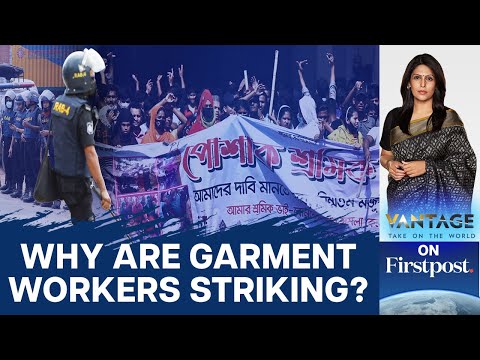
Bangladesh's garment wage board agreed on November 4 to raise the sector's minimum wage, but did not say by how much. The decision came as protests entered a fifth day, with clashes in Savar and Gazipur and hundreds of factories suspending operations.

Workers want Tk 30,000 a month, more than double the current Tk 12,500. Worker and employer representatives on the six-member board said they would finish by December so higher salaries can be paid in January. The government announced the board on November 1 and said it would be formally gazetted within a week.

Why it matters

The size of the raise will set pay for about 4 million workers and the clothing costs passed to Western brands.

Questions about this story

Free account needed to ask — your question is kept and asked for you right after sign-up. Answers are public.

No questions yet — be the first to ask.

Key Indicators

Tk 30,000
Monthly wage demanded by workers
More than double the current minimum of Tk 12,500.
Tk 12,500
Current monthly minimum wage
Set by the previous wage board in 2023; workers told AFP they take home about Tk 13,000.
529
Factories shut, BGMEA count on November 2
BGMEA's count as of November 2; hundreds more suspended during the fifth day of protests.
987,190
Workers left without work
BGMEA figure covering the main industrial hubs.
4 million
Garment workers in Bangladesh
About 4 million people.
80%
Share of export earnings from garments
The sector is the backbone of Bangladesh's foreign currency income.
5 days
Protests as of November 4
Demonstrations began October 31 and continued through a fifth day.
December 2026
Wage board target
Board aims to finish work so workers receive raised salaries in January.

Voices

Curated perspectives — historical figures and your fellow readers.

Sign up to generate historical perspectives on this story.

People Involved

Organizations Involved

Timeline

October 2026 November 2026

12 events Latest: 7 days ago Showing 8 of 12
Tap a bar to jump to that date
  1. Wage board agrees to raise garment minimum

    Latest Policy

    At its first meeting, the six-member board agrees to raise the minimum wage but does not specify the amount. Worker and employer representatives say work will be finished by December so higher salaries can be paid in January.

  2. Protests enter fifth day as clashes continue

    Protest

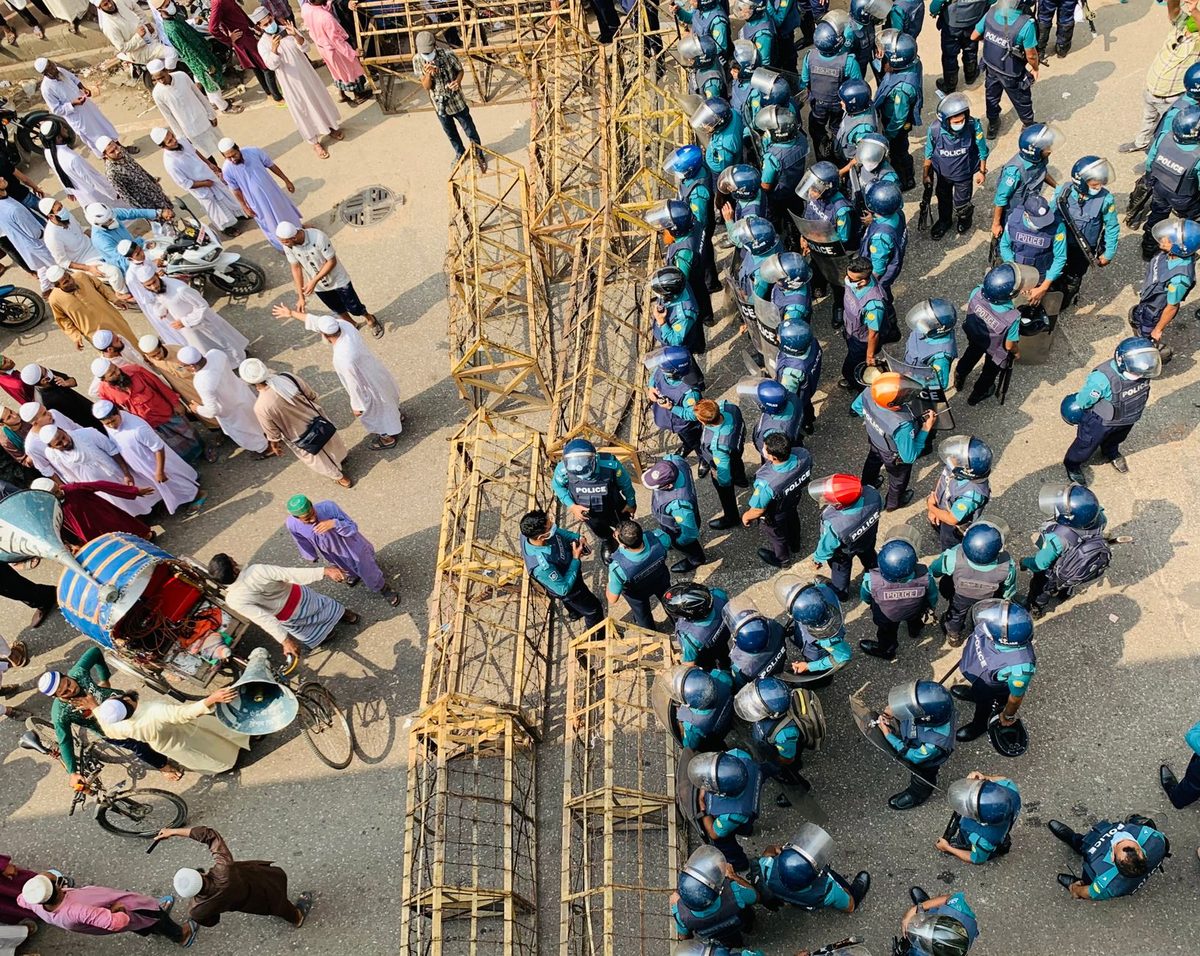
    Clashes break out in Savar and Gazipur, two main garment hubs. Hundreds of factories suspend operations as workers keep demanding Tk 30,000 a month.

  3. Factories reopen as wage protests enter a third day

    Business

    Garment factories reopen after Sunday's closures, but workers demonstrate again in Savar, Ashulia and Gazipur. Police fire tear gas and stun grenades in Ashulia; the strike spreads to Narayanganj.

  4. BGMEA reports 529 factories shut and 987,190 workers idled

    Economy

    The factory owners' association puts the toll of the unrest at 529 closed plants and 987,190 workers out of work across the main industrial hubs.

  5. Prime minister orders protection of workers' interests

    Policy

    Prime Minister Tarique Rahman directs authorities to protect garment workers' interests and keep production and exports running, and warns that violence and sabotage will be handled strictly.

  6. Police report 58 officers hurt and 57 arrests

    Security

    The force says 58 officers have been injured since protests began on Saturday and that at least 57 people have been arrested; industry representatives say workers from at least 670 factories walked out on Monday.

  7. Government announces six-member wage board

    Policy

    The labour ministry announces the board under the Bangladesh Labour Act to set a new garment minimum wage; the minister says it will be gazetted within a week.

  8. Workers block Dhaka roads and highways

    Protest

    Demonstrations spread to Mirpur-10 and the Dhaka-Tangail Highway in Gazipur; police fire tear gas and sound grenades.

  9. Forty-five Gazipur factories close as unrest turns to arson

    Security

    Three sites including a factory warehouse are set on fire; five platoons of Border Guard Bangladesh deploy.

  10. More than 100 factories declare holidays as protests spread

    Protest

    Garment workers demonstrate in Dhaka, Gazipur and Savar. Factory owners say more than 100 sites declared holidays, including at least 45 in Gazipur.

  11. Labour minister says wage board will be gazetted within a week

    Policy

    Ariful Haque Chowdhury says the board's formal notification will follow within a week and urges workers to return to their factories. The ministry issues separate gazette notifications on the board's formation the same day.

  12. Protests shut factories in Ashulia

    Protest

    Garment workers demand a Tk 30,000 minimum wage; about 30 factories declare holidays.

Scenarios

1

Wage board sets an increase below Tk 30,000

Likely Resolves by Q2 2027

Discussed by: Reuters, The Daily Star and bdnews24.com, drawing on the 2018 and 2023 wage boards

The board agreed on November 4 to raise the minimum but did not say by how much. Worker representatives want the increase by December and say employers agreed. The remaining question is whether the figure gets close to Tk 30,000 or lands well below it, as in 2018 and 2023.

2

Board endorses Tk 30,000 and owners resist

Unlikely Resolves by Q2 2027

Discussed by: Worker representatives and the Times of India, which reported the owners' cost objections

Sustained street pressure and the public-sector pay comparison push the worker side to hold out for the full demand. If the board recommends Tk 30,000 or more, factory owners say they would struggle to pay it without higher order prices, setting up a second confrontation over implementation and export contracts.

3

Unrest widens before the board reports

Possible Resolves by End of 2026

Discussed by: The Daily Star and Gazipur police statements

Protests reached a fifth day on November 4, with clashes in Savar and Gazipur and hundreds of factories suspended. If the board's figure falls short or details stay vague, shutdowns could widen again and push export shipments back.

4

Factory owners lock out workers under Section 13(1)

Possible Resolves by Nov 15, 2026

Discussed by: Traders Union, citing factory owners

Manufacturers warn that if workers refuse to return after the wage board announcement, they could declare temporary closures under Section 13(1) of the Labour Act. A lockout would turn the wage dispute into a fight over jobs and export deadlines.

Historical Context

3 moments from history that rhyme with this story — and how they unfolded.

April 2013

Rana Plaza collapse (2013)

The eight-storey Rana Plaza garment factory complex outside Dhaka collapsed on April 24, 2013, killing 1,134 workers. The disaster exposed unsafe buildings and low pay across the export garment sector and drew global attention from the brands that bought from it.

Then

Global brands faced protests and signed a factory safety accord; Bangladesh raised the garment minimum wage to Tk 5,300 later that year.

Now

The collapse made factory safety and wage floors a permanent part of buyer-supplier negotiations in Bangladesh.

Why this matters now

It shows how a disaster can force a wage review. Today's dispute is the slower, institutional version of the same argument over who bears the cost of safer, better-paid garment work.

September 2018

Garment wage protests and board (2018)

A government wage board raised the garment minimum to Tk 8,000 from Tk 5,300. Workers had demanded Tk 16,000, and protests shut hundreds of factories; police fired tear gas at demonstrations.

Then

The award took effect in December 2018 despite worker rejection.

Now

It set the pattern of wage board awards landing well below the demands on the street.

Why this matters now

The current board is following the same sequence: protests, a constituted board, and a government award that is likely to fall short of the demanded figure.

October-November 2023

Garment wage protests and board (2023)

Violent protests over pay shut factories across the garment belt. A wage board then set the minimum at Tk 12,500, below the Tk 23,000 workers had demanded.

Then

The Tk 12,500 figure took effect and became the baseline for the current dispute.

Now

Worker groups rejected the award as inadequate, and the gap between the board figure and living costs became the organising complaint for later protests.

Why this matters now

The current Tk 12,500 minimum is the 2023 award. The Tk 30,000 demand is a direct challenge to how far that previous settlement has been eroded by food, housing and transport costs.

Sources

(24)