
Pull to refresh
Logo
Balloon-borne telescope reveals twisted magnetic web above the Sun's quiet regions

Balloon-borne telescope reveals twisted magnetic web above the Sun's quiet regions

New Capabilities

Sunrise-III data show thread-like magnetic structures in the chromosphere, offering new clues to coronal heating

Overview

Updated Oct 26

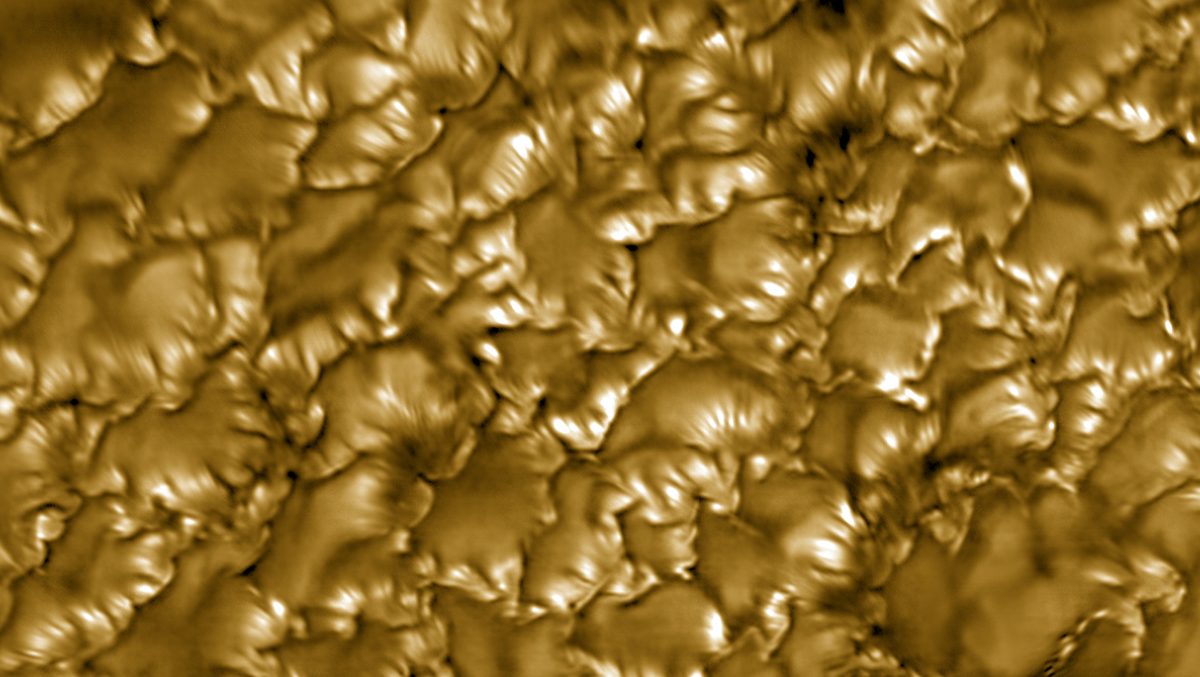
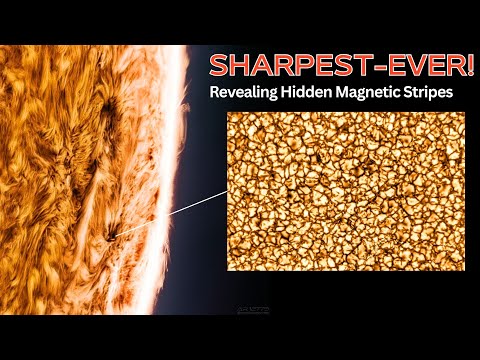
The Sun's quiet regions hide a complex magnetic world. A balloon-borne telescope high in the stratosphere has found thread-like magnetic structures woven through the solar atmosphere above areas that look featureless from below.

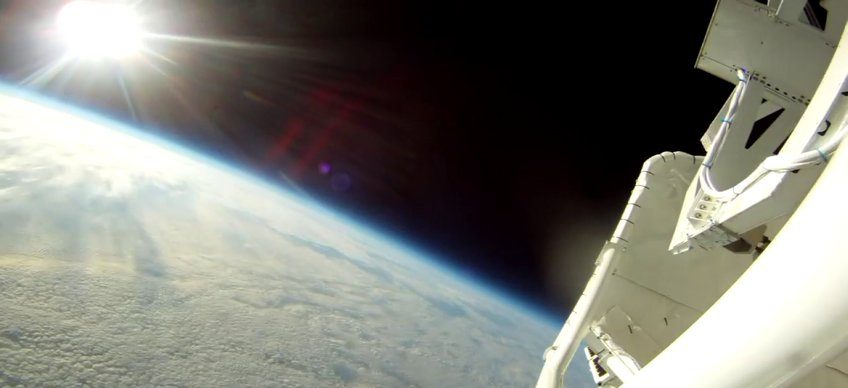
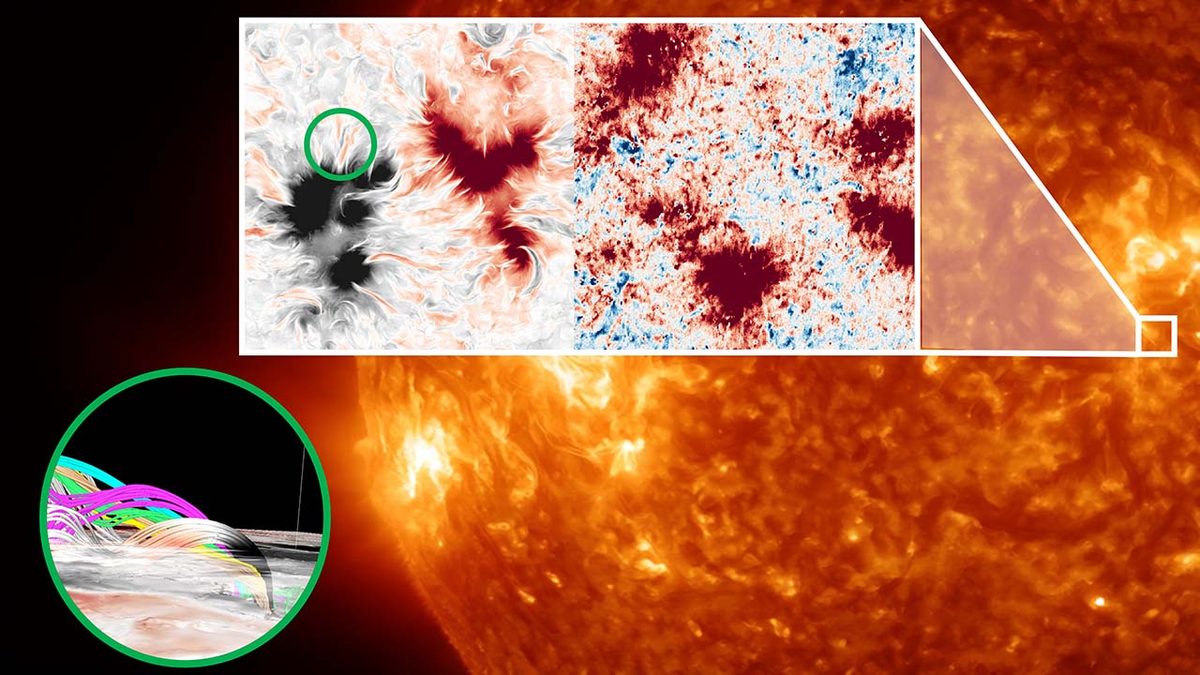
Sunrise-III flew for six and a half days in July 2024 and returned about 200 terabytes of data. In results published in The Astrophysical Journal Letters, the team reports that some threads carry the opposite magnetic polarity to the canopy around them, a setup where magnetic fields can snap and release heat. The same instrument mapped magnetic fields inside spicules, jets of plasma rising from the surface, and showed how those fields change with height.

Why it matters

Threads like these may carry energy from the Sun's surface into its superheated corona, a puzzle open since the 1940s.

Questions about this story

Free account needed to ask — your question is kept and asked for you right after sign-up. Answers are public.

No questions yet — be the first to ask.

Key Indicators

200+ TB
Solar data collected
Captured over a 6.5-day flight in the stratosphere in July 2024.
50 km
Smallest structures resolved
Recorded from roughly 150 million kilometers away.
10–20 G
Weaker than the surrounding canopy
Field strength of the thin threads, measured along the line of sight.
6.5 days
Flight duration
Time the observatory spent observing before touchdown.

Voices

Curated perspectives — historical figures and your fellow readers.

Sign up to generate historical perspectives on this story.

People Involved

Organizations Involved

Timeline

2015 September 2026

4 events Latest: September 30th, 2026 · 1 month ago
Tap a bar to jump to that date
  1. Sunrise-III quiet-Sun results announced

    Latest Publication

    NAOJ announces results published in The Astrophysical Journal Letters describing thread-like magnetic structures above quiet-Sun regions and magnetic field maps of spicules.

  2. Twisted flux ropes confirmed across the Sun

    Research

    CNRS-led study shows twisted magnetic flux ropes are omnipresent, even in quiet regions, and carry energy for heating.

  3. Sunrise-III balloon mission flies

    Mission

    1-meter telescope spends 6.5 days in the stratosphere, collecting 200+ terabytes of solar data.

  4. Twisted flux ropes predicted in quiet Sun

    Research

    Numerical simulations published in Nature predict twisted magnetic flux ropes form across the Sun, including in quiet regions.

Scenarios

1

Ground observatories confirm the twisted magnetic web

Likely Resolves by End of 2028

Discussed by: R. Ishikawa and colleagues at NAOJ; the broader solar physics community using DKIST and Solar Orbiter

The Sunrise-III team notes the thread-like structures appear in simulations and await confirmation at higher resolution. The Daniel K. Inouye Solar Telescope in Hawaii and the European Space Agency's Solar Orbiter can observe the chromosphere with finer detail. A peer-reviewed study reporting matching structures would validate the finding across independent instruments.

2

Quiet-region magnetic web tied to coronal heating

Possible Resolves by End of 2029

Discussed by: The Sunrise-III team and solar physicists studying the coronal heating problem

The magnetic web may explain how energy generated by motions near the solar surface is transferred into higher atmospheric layers. A follow-up analysis would need to quantify energy transport from the chromospheric structures into the corona and attribute measurable heating to them. Related work by Amari's group already shows twisted flux ropes carry enough energy to power small eruptions and heat the atmosphere.

3

Successor balloon mission approved

Unlikely Resolves by End of 2028

Discussed by: Space agencies and the Sunrise consortium partners (JAXA, DLR, NASA, Spanish institutions)

The 2024 flight carried three instruments and returned more than 200 terabytes of data, demonstrating the scientific yield of stratospheric solar observation. A follow-up mission would need formal funding approval from a participating space agency, with chromospheric magnetic field measurement as a stated goal. The field's momentum, including observations from Solar Orbiter and DKIST, supports continued investment.

4

Spicule magnetic maps produce a measured energy budget for the chromosphere

Possible Resolves by Q3 2028

Discussed by: The Sunrise-III/SCIP team at NAOJ and chromosphere researchers

SCIP mapped how the magnetic field inside spicules varies with height above the solar limb. NAOJ says the result opens a path to quantifying the energy flux carried from the surface through the chromosphere and into the corona. A follow-up study reporting such a number would turn the observation into a measurable heating term.

Historical Context

3 moments from history that rhyme with this story — and how they unfolded.

1940s

The coronal heating problem (mid-20th century)

Astronomers found the Sun's corona, its outermost atmosphere, reaches millions of degrees Celsius while the visible surface below sits at roughly 5,500 degrees. The farther you go from the Sun's heat source, the hotter it gets, a contradiction no spacecraft or theory has fully resolved.

Then

Researchers proposed magnetic fields as the energy channel, but lacked instruments to test it in the chromosphere.

Now

Eight decades later, the puzzle remains open, driving missions like Sunrise-III, Solar Orbiter, and DKIST.

Why this matters now

The magnetic web discovered by Sunrise-III is a candidate energy pathway from the surface to the corona, directly addressing this long-standing puzzle.

2015 and 2025

Twisted flux rope prediction and confirmation (2015, 2025)

In 2015, Tahar Amari's team predicted in Nature that twisted magnetic flux ropes form across the Sun, including in quiet regions. A 2025 study confirmed them observationally using Hinode satellite data, showing the ropes appear at the same altitude as small heating events called campfires and carry enough energy to power them.

Then

The confirmation established twisted structures as a viable mechanism for heating quiet regions.

Now

It linked quiet-region eruptions to the same physics as solar flares in active regions.

Why this matters now

Sunrise-III observed the chromospheric counterpart of these structures, adding height-resolved magnetic field measurements to the picture.

2022

Complex coronal web driving the slow solar wind (2022)

Observations from Solar Orbiter's Extreme Ultraviolet Imager revealed a spatially complex web of magnetized plasma structures in the corona, showing how structured slow solar wind emerges from regions intermingled with coronal holes.

Then

The finding connected fine-scale coronal structure to the solar wind flowing past Earth.

Now

It reinforced the view that the Sun's atmosphere is threaded with small-scale magnetic structure rather than smooth fields.

Why this matters now

The Sunrise-III magnetic web extends this picture down into the chromosphere, the layer where the structuring originates.

Sources

(11)