

Pull to refresh
Logo
Study finds most billion-dollar AI startups rarely publish research

Study finds most billion-dollar AI startups rarely publish research

New Capabilities

A bioRxiv analysis of 317 AI unicorns finds more than half have never led a scientific paper

July 27th, 2026: Study finds most AI unicorns rarely publish

Overview

Updated Jul 29

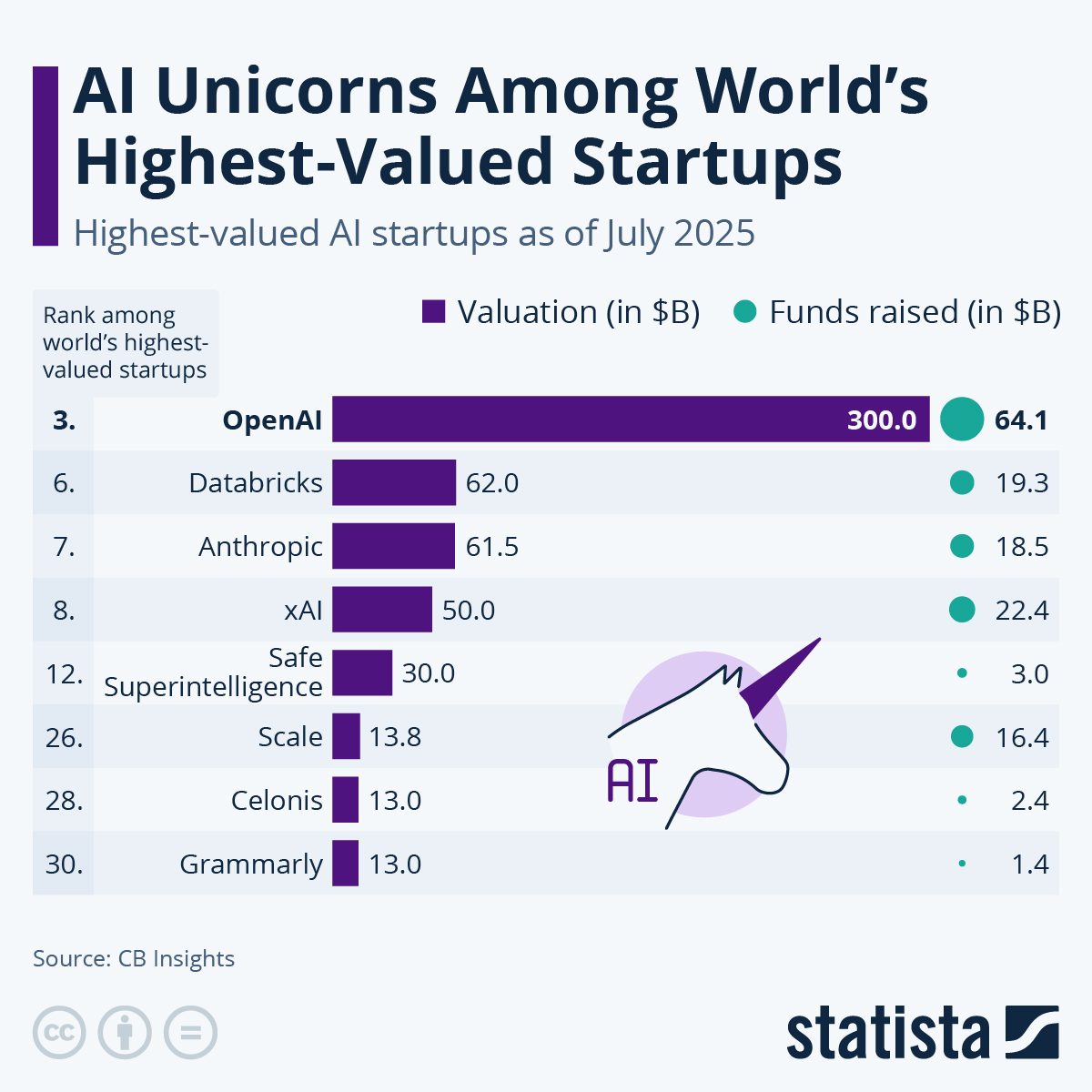
The companies claiming to reinvent science are mostly absent from the scientific record. A study covered by Science on July 27, 2026, found that more than half of the world's AI unicorns have never led a single peer-reviewed paper or preprint.

The 317 startups studied are worth over $1 billion each and promise to remake drug discovery, coding, and research itself. Together they produced just one in every 1,000 AI papers published in 2025. When they do publish, a tiny group dominates: the top 5% of firms account for more than 90% of all citations.

Why it matters

If the labs building the most powerful AI don't publish, outside scientists can't independently check what these systems do, how safe they are, or how much energy they burn.

Questions about this story

Free account needed to ask — your question is kept and asked for you right after sign-up. Answers are public.

No questions yet — be the first to ask.

Key Indicators

317
AI unicorns studied
Billion-dollar AI startups tracked from 1998 to 2025.
>50%
Never led a paper
Share of firms that never produced a first- or last-author publication.
~40%
OpenAI's citation share
One company accounts for roughly 40% of all citations in the data set.
2,077
Total publications found
1,389 peer-reviewed papers and 688 preprints across all 317 firms.
1 in 1,000
Share of 2025 AI papers
All unicorns combined produced about one of every thousand AI papers last year.

Voices

Curated perspectives — historical figures and your fellow readers.

Ever wondered what historical figures would say about today's headlines?

Sign up to generate historical perspectives on this story.

People Involved

Organizations Involved

Timeline

August 2005 July 2026

3 events Latest: July 27th, 2026 · 2 months ago
  1. Study finds most AI unicorns rarely publish

    Latest Study

    A bioRxiv preprint reports that more than half of 317 AI unicorns never led a paper, and that all combined produced one in 1,000 AI papers in 2025.

  2. OpenAI founded

    Background

    The lab launches with an early emphasis on open research, later shifting toward technical reports and blog posts.

  3. Ioannidis publishes 'Why Most Published Research Findings Are False'

    Background

    The paper becomes a foundational text in metascience, the study of how research succeeds and fails.

Scenarios

1

Major AI labs face new disclosure rules from a government or journal

Possible Resolves by Jul 27, 2027

Discussed by: Science news coverage; research integrity groups discussing AI disclosure standards

The gap prompts a concrete rule. A government body or a major journal publisher adopts a policy requiring AI firms to release code, data, or model documentation as a condition of grants, procurement, or publication. This would turn a norm complaint into an enforceable requirement.

2

Study passes peer review and appears in a journal

Likely Resolves by Jul 27, 2027

Discussed by: bioRxiv preprint authors including John Ioannidis

The preprint is not yet peer-reviewed. If the methodology holds up, it clears review and appears in a peer-reviewed venue, giving the finding more weight in policy debates. Rejection or a stalled revision would leave it as a preprint that circulates but carries less formal authority.

3

A leading AI unicorn commits to more open publishing

Unlikely Resolves by Jul 27, 2027

Discussed by: AI ethicists cited in Science; open-science advocates

One of the named low-publishing unicorns responds by pledging to publish peer-reviewed work or release model artifacts on a regular schedule. Commercial incentives push the other way, so this would be a notable reversal rather than the expected path.

Historical Context

2 moments from history that rhyme with this story — and how they unfolded.

2000-2001

Human Genome Project vs. Celera (2000)

A public consortium and the private firm Celera raced to sequence the human genome. The public effort released data openly; Celera sought to commercialize parts of it. The clash centered on who could access and reuse the data.

Then

The two sides announced a joint completion in 2000, but access terms differed.

Now

Open genome data became the norm and seeded a large research industry.

Why this matters now

It shows the recurring tension between commercial secrecy and open science, the same tension the AI publishing gap now raises.

July 2021

AlphaFold open release (2021)

DeepMind published its protein-structure predictor AlphaFold in Nature and released the code and a database of predicted structures. Outside scientists could check the work and build on it directly.

Then

Researchers worldwide used the predictions in labs within months.

Now

The open release became a reference point for what corporate AI can contribute to science when firms publish fully.

Why this matters now

It is the counterexample the new study implies: full publication let the whole field verify and extend the work. Most unicorns don't do this.

Sources

(2)