
Pull to refresh
Logo
Arctic ice cap was regrowing toward a new ice age until 1960s warming, study finds

Arctic ice cap was regrowing toward a new ice age until 1960s warming, study finds

New Capabilities

The Laurentide Ice Sheet's last remnant grew for about 2,000 years before modern warming reversed it, and not all researchers agree that growth marked the start of an ice age

Overview

Updated 7 days ago

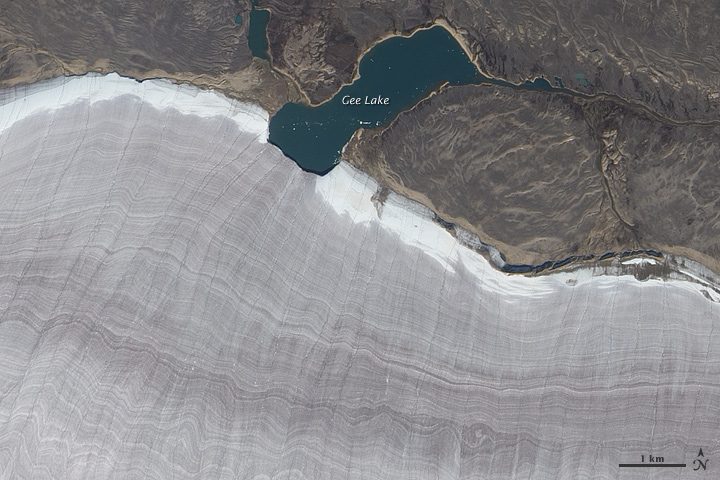
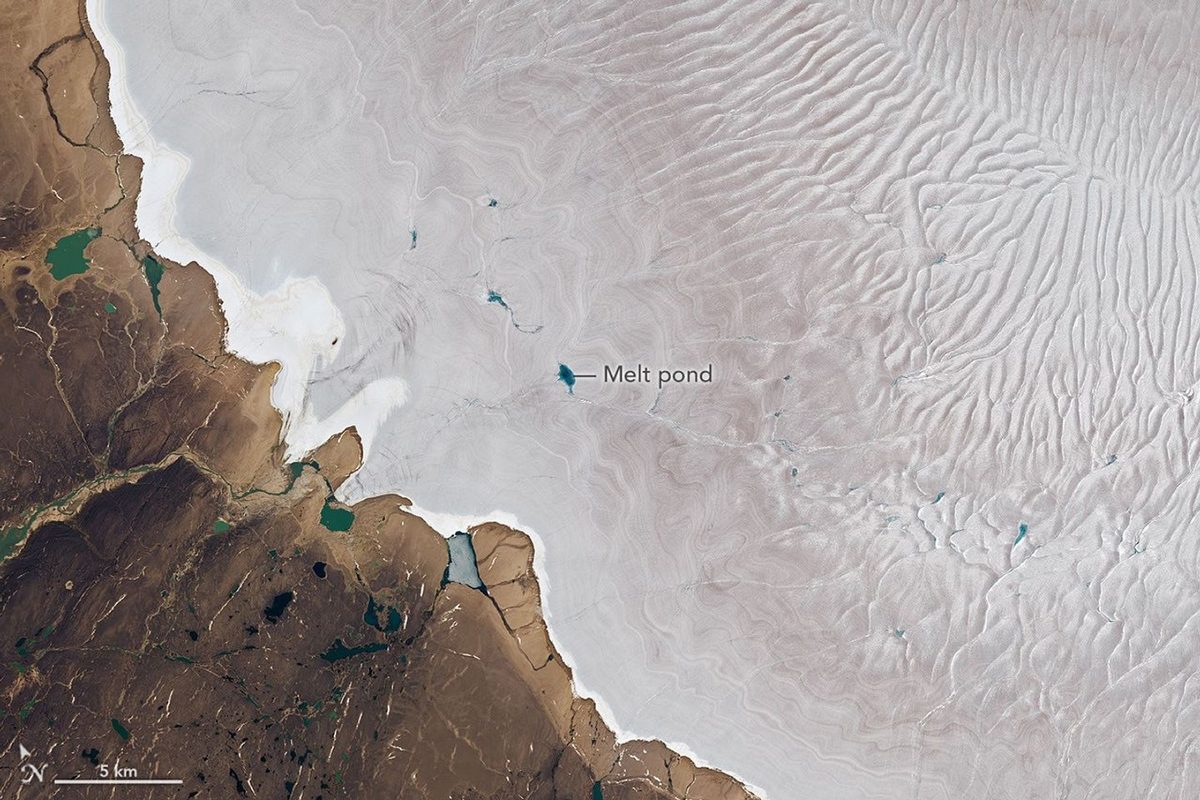
The last remnant of the ice sheet that once covered most of North America began growing again about 2,000 years ago, the start of a new glacial period. A study in Science found the Barnes Ice Cap on Baffin Island expanded until around 1960, when rising summer temperatures reversed the growth.

Other scientists are not convinced the regrowth marked the start of an ice age. Andrey Ganopolski, a physicist at the Potsdam Institute for Climate Impact Research, told CNN the ice cap's growth is "insufficient to support the conclusion that a new glacial cycle had already begun and was subsequently aborted." His modeling puts the next ice age about 50,000 years away even without warming.

Why it matters

Earth was sliding into its next ice age without any help from us. Fossil fuel emissions ended that cooling.

Questions about this story

Free account needed to ask — your question is kept and asked for you right after sign-up. Answers are public.

No questions yet — be the first to ask.

Key Indicators

~2,000
Years the ice sheet expanded before reversing
The Laurentide remnant regrew from about 2,000 years ago until roughly 1960.
1960
Year the regrown ice cap peaked
Aerial photos show the Barnes Ice Cap at its largest since regrowth around 1960, then retreating.
3%
Ice surface above the snowline by the early 2000s
Down from 35% in 1960–1980; the accumulation area vanished after 2010.
4 m
Average margin retreat per year
Satellite monitoring shows the ice cap's edge pulling back about 4 meters a year over the past 40 years.
~50,000
Years until the next ice age in one model
Physicist Andrey Ganopolski says his modeling puts the next glaciation about 50,000 years off even without global warming.

Voices

Curated perspectives — historical figures and your fellow readers.

Sign up to generate historical perspectives on this story.

People Involved

Organizations Involved

Timeline

1960 c. 3600

7 events Latest: October 29th, 2026 · 1 week ago
Tap a bar to jump to that date
  1. Laurentide Ice Sheet reaches minimum size

    Upcoming Climate

    The ice sheet that once blanketed most of North America shrank to its smallest interglacial extent, retreating within the modern Barnes Ice Cap margin.

  2. Ice sheet begins regrowing

    Upcoming Climate

    Summer insolation decline lowered the snowline; the ice sheet's mass balance turned positive and it began expanding — the natural onset of the next glaciation.

  3. Outside researchers question the ice-age framing

    Latest Research

    In CNN interviews, Dartmouth's Meredith Kelly called the study's dating of entombed plants a good picture of the ice cap's advance and retreat, while the Potsdam Institute's Andrey Ganopolski said the growth is insufficient to show a glacial cycle had begun.

  4. Science paper: regrowth reversed by modern warming

    Research

    Young and colleagues show the Laurentide remnant expanded for ~2,000 years until ~1960, then retreated; they attribute the reversal to anthropogenic greenhouse warming.

  5. Barnes Ice Cap snow cover gone by mid-July

    Climate

    Landsat images showed the ice cap largely stripped of snow by mid-July, the earliest glaciologist Mauri Pelto has recorded, exposing bare ice and opening meltwater channels weeks ahead of a normal season.

  6. Moss kill dates map Common Era ice expansion

    Research

    A companion study dated vegetation entombed by expanding Baffin Island ice caps, finding the 1780–1880 cold peak approached ice-age inception conditions.

  7. Regrown ice cap reaches peak size

    Climate

    Aerial photographs show the Barnes Ice Cap near its historical maximum around 1960, after which summer warming began driving retreat.

Scenarios

1

Independent dating confirms the ~2,000-year regrowth onset

Possible Resolves by Q2 2029

Discussed by: Glaciology and paleoclimate researchers

The study's core claim is that the Laurentide remnant's reexpansion began about 2,000 years ago, marking glacial inception. Other teams are already dating vegetation and rock emerging under retreating Arctic ice caps. A confirming study using independent radiocarbon or beryllium-10 samples would solidify the timeline.

2

Barnes Ice Cap enters irreversible terminal retreat

Likely Resolves by Jan 1, 2031

Discussed by: Glacier monitoring agencies and the study authors

The ice cap's accumulation area has been effectively zero since 2010, meaning it loses ice every year. The study authors project complete melt within the next few centuries. Continued negative mass balance in annual monitoring would confirm the ice cap is past the point of recovery.

3

Scientists challenge the 'next glaciation interrupted' framing

Unlikely Resolves by End of 2028

Discussed by: Paleoclimatologists including Andrey Ganopolski and Meredith Kelly

The challenge arrived within a week of publication. Andrey Ganopolski of the Potsdam Institute for Climate Impact Research told CNN the ice cap's growth is "insufficient to support the conclusion that a new glacial cycle had already begun and was subsequently aborted," and said his modeling puts the next ice age roughly 50,000 years away even without warming. Dartmouth's Meredith Kelly said the study's techniques are sound but that comparisons with glaciers advancing elsewhere at the same time would help.

Historical Context

3 moments from history that rhyme with this story — and how they unfolded.

c. 1300–1900

Little Ice Age (c. 1300–1900)

A centuries-long cooling of the Northern Hemisphere, strongest in the Arctic, that expanded glaciers worldwide. On Baffin Island, ice caps covered more than 11,000 square kilometers at the 1780–1880 peak — over a hundred times the area glaciated today.

Then

Glaciers advanced and cold summers persisted for centuries across the North Atlantic region.

Now

Cooling after about 1880 reversed as industrial greenhouse gas emissions rose, ending the Little Ice Age.

Why this matters now

The Little Ice Age is the recent peak of the same late-Holocene cooling trend the study says was driving the Laurentide remnant's reexpansion into a new glacial period.

1970s

1970s 'impending ice age' speculation

A handful of scientists and media reports in the 1970s suggested Earth might be heading toward a new ice age, based on a long cooling trend since the 1940s. The idea drew sharp skepticism and faded as warming became clear.

Then

The ice-age speculation was largely dismissed when global temperatures began rising sharply in the 1980s.

Now

The episode became a cautionary tale about overinterpreting short-term trends.

Why this matters now

This study provides direct physical evidence that a glacial inception trend was genuinely underway around 2,000 years ago — and was cut off by anthropogenic warming — lending new context to that old debate.

c. 115,000 years ago

Eemian interglacial to last glaciation (c. 115,000 years ago)

The last interglacial period ended when declining Northern Hemisphere summer insolation allowed Northern Hemisphere ice sheets to regrow, eventually building the ice masses of the last ice age. That inception is the canonical example of how interglacials give way to glaciations.

Then

Summer cooling and snowline descent triggered ice sheet expansion across Arctic North America and Eurasia.

Now

Ice sheets grew for tens of millennia, reaching the Last Glacial Maximum about 20,000 years ago.

Why this matters now

The same insolation-driven mechanism the Eemian example illustrates is what the study says was beginning again — until greenhouse forcing interrupted it.

Sources

(10)